The 2017 Fussy Cutters Swap still feels useful because it exposed the real mechanics of a good exchange: print choice, placement control, mailing discipline, and the quiet trust between makers who may never meet in person.
I look back at it less as a nostalgia exercise and more as a working reference. If you are planning a swap now, or studying why certain blocks still look sharp years later, this event gives you a clear set of field notes.
Contents
- Key Takeaways from the 2017 Swap
- The Magic of Fussy Cutting in a Swap Environment
- Standout Fabric Choices and Motifs
- Technical Triumphs in English Paper Piecing
- Navigating Swap Challenges and Limitations
- Building Community Through Stitches
Key Takeaways from the 2017 Swap
Print variety carried the finished work
The first thing I noticed in the 2017 swap was not one perfect block. It was the range.
Novelty prints sat beside geometric repeats, florals, text fragments, and tiny illustrated scenes. That mix mattered because fussy cutting rewards difference. A fox face, a flower center, and a clipped word each force a maker to solve a different placement problem.
A typical online quilting swap in that period gave participants a sign-up window of about a week or two, then a making period of roughly six to ten weeks before mailing. That rhythm left enough time for thoughtful fabric selection without turning the project into a year-long obligation.
EPP gave makers control
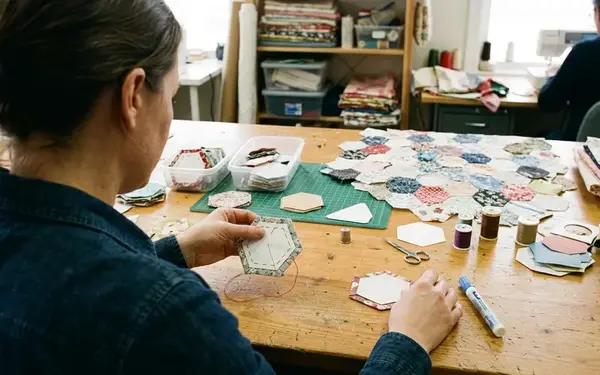
English Paper Piecing (EPP) became the steady companion technique because the paper shape defines the finished edge. For fussy cutting, that edge is the whole argument.
Blocks suitable for this kind of swap commonly used repeat-dependent motifs with a visible target area of roughly 1.5-4 inches, especially in hexagons, diamonds, and small medallion centers. Too small, and the motif reads as noise. Too large, and the maker starts fighting the repeat.
The swap travelled well beyond one sewing table
Global participation gave the event its warmth. Patchwork has always moved through households, guilds, letters, and shared cloth; the Victoria and Albert Museum’s overview of the historical traditions of patchwork and quilting makes that long movement visible.
The 2017 swap sat in that same line, just with hashtags, padded envelopes, and progress photos.
Critical Insight: The strongest swap blocks did not simply use beautiful fabric. They used fabric whose scale matched the template, the seam allowance, and the recipient’s stated preferences.
The Magic of Fussy Cutting in a Swap Environment
Making for a stranger sharpens decisions
A swap changes the pressure. When I make for myself, I can indulge a private joke in the fabric or let a motif sit slightly off-centre because I know why I chose it. When I make for someone else, every decision needs to communicate clearly.
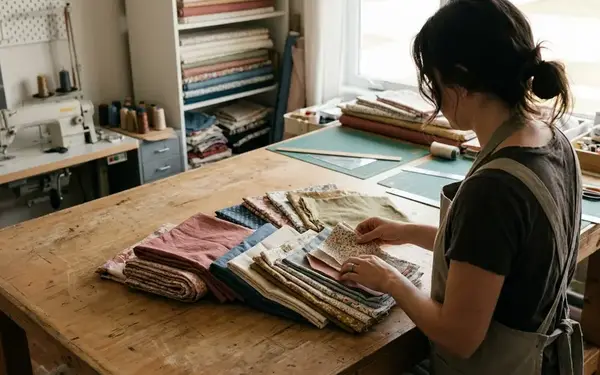
Hosts commonly asked participants for a handful of preference prompts: favourite colours, disliked colours, preferred motifs, and whether novelty prints were welcome. That small data set was enough to guide a fabric pull, but not enough to remove creative risk.
That is where fussy cutting becomes generous. The maker studies the print, isolates a small scene, and turns one repeat into a deliberate gift.
Anticipation becomes part of the construction
The waiting mattered.
A participant might spend twenty to forty-five minutes choosing one fabric window before cutting, especially when the repeat included small characters, text fragments, or mirrored floral elements. That time rarely appeared in the finished Instagram caption, but it showed in the block.
Swap etiquette usually expected progress photos at a few points during the making period: fabric pull, cut pieces, basted units, and finished block. Those checkpoints built confidence without requiring everyone to reveal the final surprise too early.
Trust lives in small standards
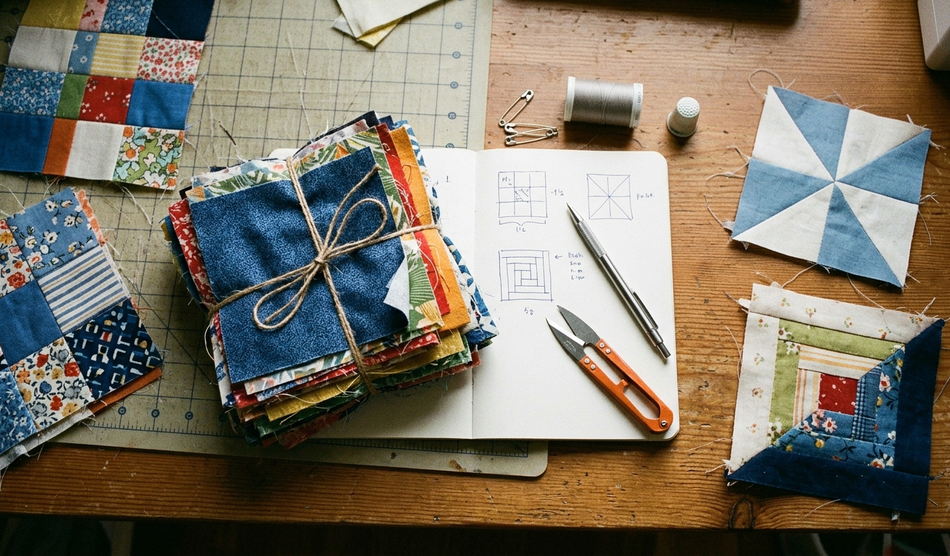
Workshop experience shows that swap trust rarely comes from grand rules. It comes from shared standards: clean seams, honest progress updates, careful pressing, and no mystery pins left in the envelope.
That same principle shapes good audio production. When Laura Samulionyte, audio editor, checks a craft conversation, the tiny controls matter: levels, pacing, room tone. A swap block works the same way. The recipient feels the care before they analyse the method.
Standout Fabric Choices and Motifs
Animals, florals, and words led the visual field
The standout fabrics from 2017 tended to fall into a few memorable families: whimsical animals, bold florals, typography, and small illustrated scenes. I would rather examine those deeply than pretend every category behaved the same.
Take typography. A readable word inside a hexagon feels clever only if the letters survive the seam. Typography fabrics worked best when the readable word or phrase stayed a little way back from the stitch line after basting. Any closer, and the seam could swallow the point of the print.
Acrylic templates made the repeat visible
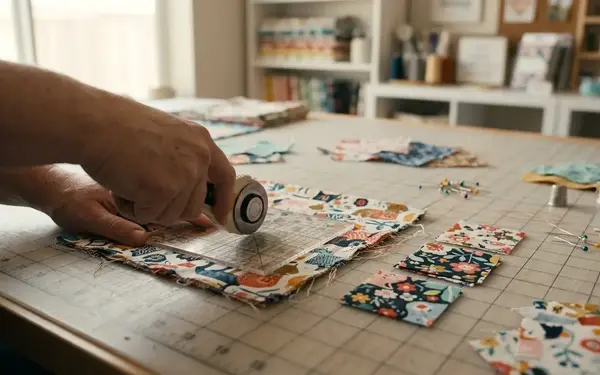
Acrylic templates changed the cutting conversation because makers could preview the finished window before committing. That is a practical advantage, not a luxury.
Novelty prints with repeat spacing of roughly 4-12 inches gave makers enough room to isolate one complete image while still leaving seam allowance around the chosen scene. Acrylic templates used for fussy cutting were typically paired with a quarter-inch seam allowance, so the visible motif had to sit safely inside the finished shape rather than on the cutting edge.
Designer fabric was not the only path
Recognisable designer prints brought energy to the swap, especially when makers spotted a beloved fabric in someone else’s block. Shops such as Chelsea: owner of Pink Door Fabrics, helped many quilters understand how modern novelty prints could carry a project.
Still, the hidden gems often came from stash scraps. A tiny bird from an old fat quarter. A single flower clipped from a border print. A phrase that made sense only because the maker rotated the template twice and waited.
Recommendation: Before cutting, place the acrylic template over the motif and check the finished edge, not just the cutting edge. The seam allowance is not display space.
Technical Triumphs in English Paper Piecing
The paper shape made placement repeatable
EPP is slow in the best way. It asks the maker to decide where the motif belongs, then gives that decision a stable edge.
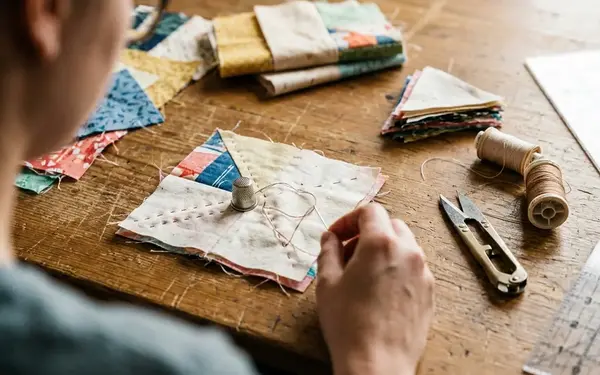
For a centered hexagon, makers often marked the same visual point on both the template and the fabric, then checked alignment again after the first two basting folds. That second check is where many blocks were saved. Fabric shifts. Fingers get confident. Glue grabs faster than expected.
Basting method changed the working pace
Glue basting usually took under a couple of minutes per small unit. Thread basting often took a few minutes per unit depending on shape complexity and fabric thickness.
Neither method won every situation. Glue helped when a maker needed speed and crisp preview control. Thread gave more flexibility when the fabric resisted folding or when the maker wanted to avoid adhesive near a delicate print. The best 2017 blocks looked less like a basting-method argument and more like a maker choosing the right control for the cloth in hand.
Diamonds and pentagons created secondary pattern
This is where the swap moved beyond cute motifs.
Diamonds and elongated hexagons created stronger secondary patterns when the same motif was cut several times from one repeat and rotated around a center point. That technique sits close to the discipline readers admire in Willyne Hammerstein: author of Millefiori Quilts, where repetition and rotation create movement rather than decoration alone.
Pentagons demanded more corner management than hexagons because five seam intersections can produce bulk if the fabric allowance runs much past a quarter-inch or so. In a swap block, that bulk was not just a technical flaw. It affected how the piece travelled, pressed, and joined later.
Risk Factor: A beautiful motif can fail in a swap block if the printed face, word, or flower center lands inside the seam allowance after basting rather than inside the finished shape.
Navigating Swap Challenges and Limitations
Mailing windows needed honest planning
The least romantic part of the 2017 swap was also one of the most important: postage.
International parcels for fabric swaps in that period often needed a mailing buffer of two to four weeks, depending on customs handling and whether the envelope was treated as a letter, large letter, or small packet. Participants sending across borders generally needed to mail two to five weeks before the reveal target if the host wanted most packages to arrive within the same reveal window.
A domestic swap could tolerate a week or two of mailing window, while a cross-border exchange often needed longer and sturdier flat packaging to protect the same type of EPP block.
Skill variation was a design constraint
Not every participant read a guideline the same way. That was not a character problem. It was an instruction problem.
Clear swap instructions usually specified finished size, acceptable techniques, whether extras were optional, and whether blocks should be pressed, trimmed, or left with papers in place. Without those details, makers filled the gaps with local habits.
The useful qualifier here is simple: international timing varied sharply when customs forms described contents inconsistently, so a parcel of fabric pieces could arrive in under two weeks for one route and take more than a month on another.
Flat protection beat decorative bulk
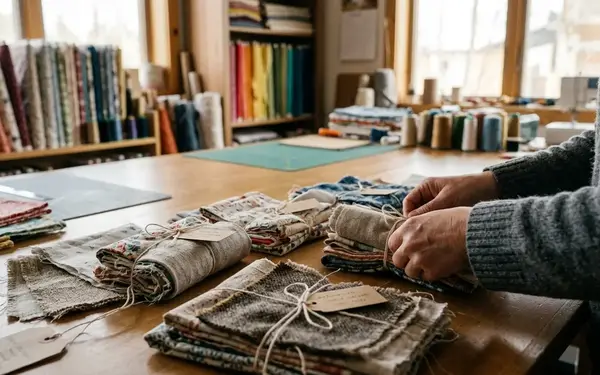
A finished EPP block or mini panel mailed flat was commonly protected with a card insert or lightweight board cut a little smaller than the envelope to prevent corner tearing.
Damage risk increased when envelopes contained loose pins, bulky extras, or unprotected embellishments more than a quarter-inch thick. Extras were sweet. Safe arrival was sweeter.
- Press the block only if the host requested it.
- Remove loose threads and check for hidden pins.
- Place the block in a clean sleeve or folded paper wrap.
- Add a flat card insert slightly smaller than the envelope.
- Mail early enough for the destination, not just the deadline.
Building Community Through Stitches
The received block was only the beginning
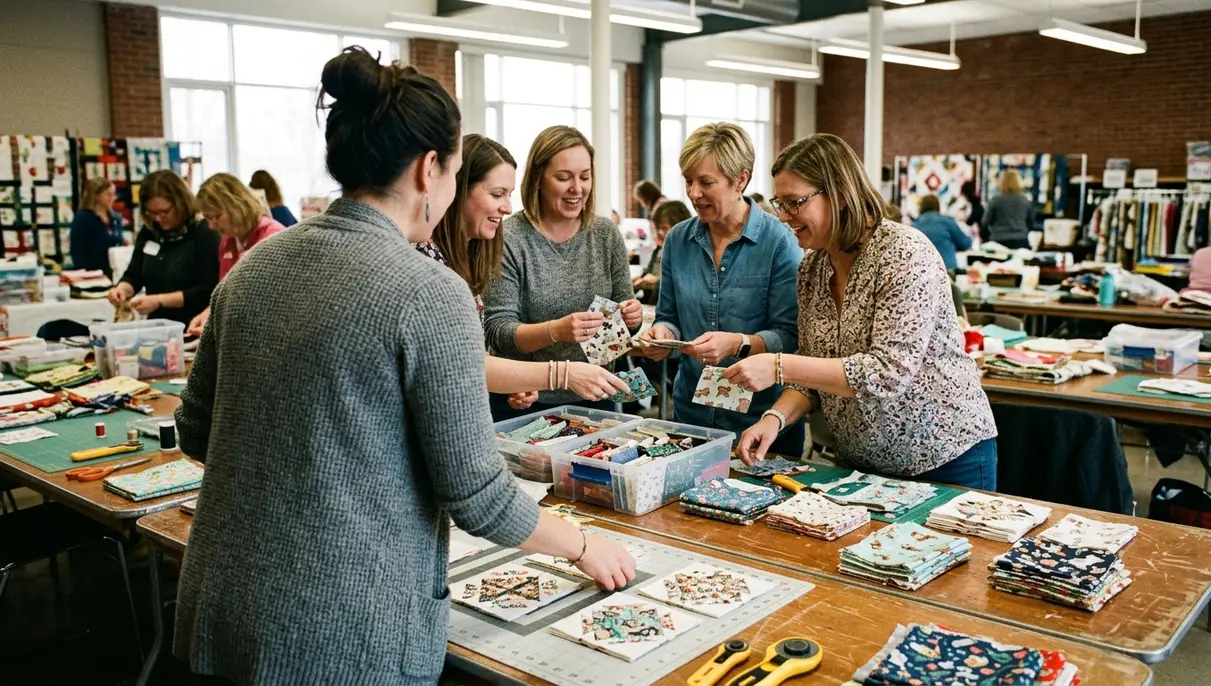
The best outcome of the 2017 swap was not the pile of finished blocks, though those were lovely. It was the continuation.
Post-swap interaction commonly continued for a month or three through thank-you posts, finished quilt-layout photos, and follow-up comments on received blocks. That window mattered because it turned a single exchange into a visible community record.
Leftovers became future work
Makers often saved leftover fussy-cut windows as small scraps for later EPP rosettes, zipper pouches, needle books, or label details. I like that economy. It respects the time already spent finding the right little scene.
A scrap from one swap can become the centre of another project months later. That is how a community keeps talking through cloth.
The archive taught the next group
A successful swap archive gave future participants practical references: fabric pull photos, template placement examples, finished block scale, and packaging approaches. That archive was not a polished manual, but it was often more useful than one.
The 2017 Fussy Cutters Swap reinforced what many of us already felt in the online quilting community. Encouragement works best when it has structure. Give makers a clear brief, enough time, and room for personality, and they will build something that travels farther than the envelope.
That is the real highlight. Not just the fussy cutting, but the care made visible.