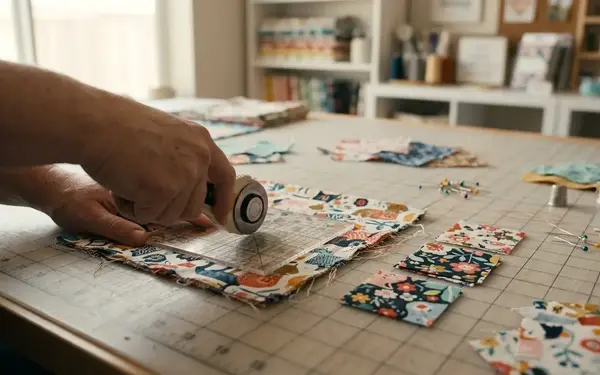
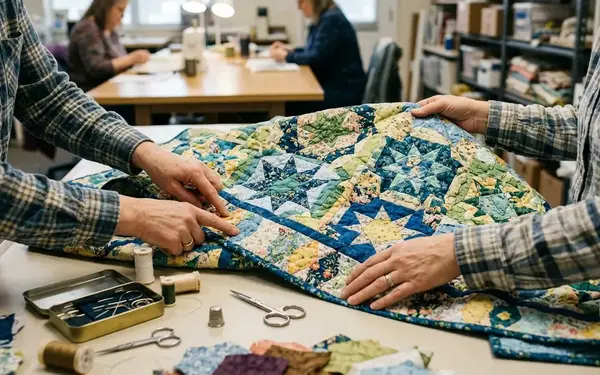
The first international fabric swap feels more exciting than a local one because the parcel has a longer story to tell. It also has more places to get stuck.
I treat the swap like a small production job: read the host rules, check the destination country, then choose the fabric stack. That order matters. Customs rules can affect what you cut, what extras you include, and how honestly you describe the parcel at the counter.
Contents
- Key Takeaways for a Successful Global Swap
- Navigating International Shipping and Customs
- Curating and Cutting Your Swap Fabrics
- Packaging Textiles for Safe Global Transit
- Swap Etiquette and Managing Expectations
Key Takeaways for a Successful Global Swap
Start with the destination, not the fabric pile. That sounds unromantic, but it saves the most grief.
For a small international fabric swap, I plan as though the parcel may spend 10 to 30 calendar days in transit. If customs inspects or holds it for import processing, another 2 to 10 business days can appear without much warning. Build that reality into your cutting night, not into your apology message later.
The working order
- Read the swap host’s rules from top to bottom.
- Check the destination country’s mail restrictions before adding extras.
- Confirm the required cut size and measurement system.
- Cut only after the contents are settled.
- Leave 3 to 5 calendar days for packaging, customs forms, and the post office visit before the mailing deadline.
Common swap cuts include fat quarters at 18 x 22 inches, fat eighths at 9 x 22 inches, and charm squares at 5 x 5 inches. Confirm whether the host expects inches or metric before you put blade to cloth. A neat stack cut in the wrong system is still the wrong stack.
Critical Insight: A fabric extra that is harmless in one country, such as a scented sachet, untreated wooden notion, or food treat, may create inspection delays or removal in another destination.
First International Fabric Swap Mailing Checklist
- Confirm the destination country and review textile, plant, food, wood, and scent-related restrictions before adding extras.
- Re-read the swap theme, required cut size, mailing deadline, and prewashing instructions.
- Measure the fabric after squaring the edge, not from a distorted fold.
- Seal the textile bundle inside waterproof inner packaging.
- Weigh the finished parcel after the inner bag, card, tape, and outer mailer are included.
Navigating International Shipping and Customs
The customs description should come after the parcel contents are final. Not guessed at the counter. Not invented because the queue is long.
Use plain language. Descriptions such as “cotton quilting fabric pieces for craft swap” or “100% cotton fabric squares, no commercial sale” tell the postal system what is inside. Vague wording like “gift” or “supplies” alone asks the inspector to do too much interpretation.
Forms, weight, and value
Weigh the sealed parcel after the waterproof inner bag and tape are added. A bundle of 6 quilting cotton fat quarters often lands somewhere in the 180 to 280 gram range before the outer mailer, so small packaging choices can change the postal band.
If the customs form asks for value, use the actual replacement value of the fabric and extras. Many hobby swaps sit in a modest declared-value range, but the number should come from what you paid or what you would pay to replace the items.
For United States senders, the postal service explains international customs declaration requirements in practical terms. Other postal systems have similar guidance, and the swap host’s country-specific notes should override general advice when they conflict.
Recommendation: Write the customs description at home, then copy it onto the form. Counter pressure makes people vague.
Standard mail versus tracked parcels
Standard international mail may show only acceptance and delivery scans. A tracked parcel service is more likely to show export, import, customs, and delivery events. Even then, gaps of 5 to 14 calendar days between scans are common once the parcel leaves the origin country.
Import rules for textiles and handmade extras vary by destination, so this guidance should stay secondary to the swap host’s route-specific instructions.
Curating and Cutting Your Swap Fabrics
The fabric should feel generous before it feels clever.
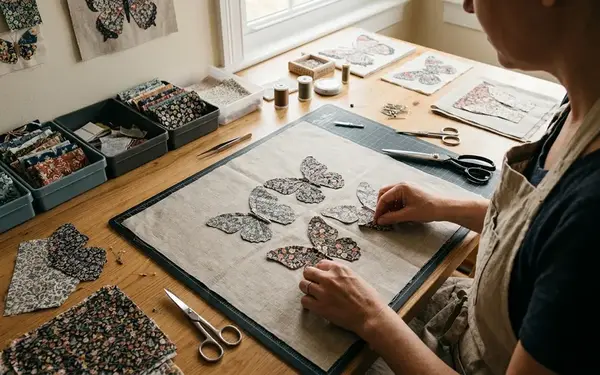
For Fussy cutting and English Paper Piecing groups, I choose by theme first, condition second, and cut accuracy third. That sequence keeps me from forcing a beautiful print into the wrong brief. A jewel-toned animal print might thrill one partner and miss another swap completely if the theme is low-volume florals.
Choosing prints for EPP use
For English Paper Piecing-friendly swaps, useful motif areas often sit within 1 to 3 inch windows. That gives the recipient room to feature a face, flower, shell, stripe repeat, or tiny architectural detail inside hexagons, diamonds, or small blocks.
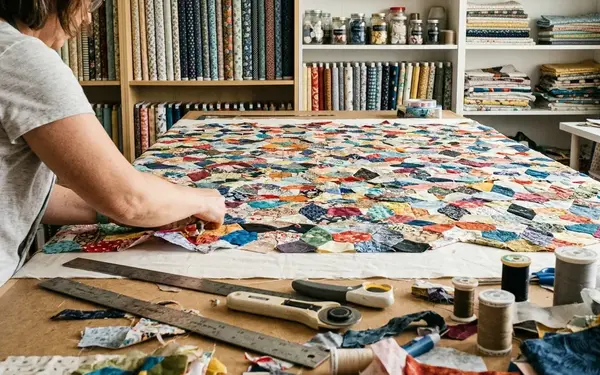
This is where the swap becomes personal. If the group is working toward Millefiori Quilts-style projects inspired by Willyne Hammerstein, contrast and repeat points matter more than the overall yardage drama. The recipient may never use the full print as a whole cloth. They may isolate one leaf, one eye, one medallion edge.
Workshop experience shows that the most useful swap pieces are not always the loudest. They are the ones that give another maker clean decisions at the cutting mat.
Cutting without apology
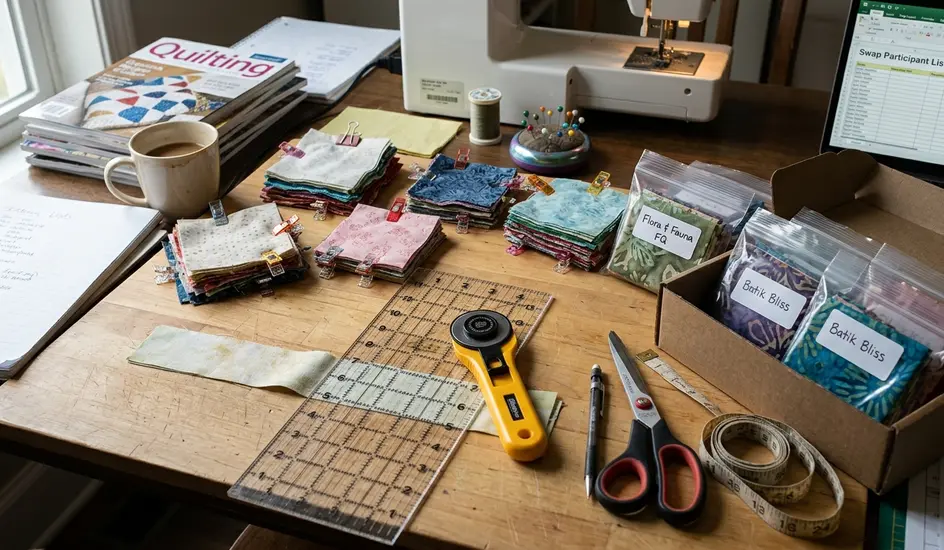
- Use premium quilting cottons that match the swap guidelines.
- Square the fabric edge before measuring.
- Align the acrylic ruler to the grain.
- Use a rotary blade that cuts cleanly through 2 to 4 layers of quilting cotton.
- Replace the blade if it skips threads.
- Confirm a fat quarter finishes at 18 x 22 inches rather than trimming from a pulled fold.
Avoid fabric with strong odors from smoke, pets, cooking, candles, or heavy perfume. If the fabric has been stored near any of those, air it out for a day or two before packing. Respect travels with the cloth.
Packaging Textiles for Safe Global Transit
Package the fabric as though it will spend part of the trip in a damp sorting bin or delivery bag. That mental picture changes the whole method.
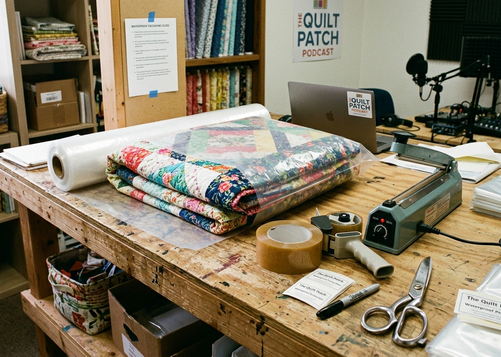
Fold fat quarters into rectangles roughly 6 x 9 inches or 7 x 10 inches. The goal is a flat parcel, not a compressed brick. Flat bundles usually travel better through economical package handling and create less strain at the corners.
The inner layer
Use a clear zip bag or cellophane sleeve at least 1 inch larger than the folded fabric stack on two sides. If the seal strains, the bag is too small. Press out trapped air gently, then close it without crushing the fabric into hard creases.
Clear packaging also helps if the parcel is inspected. The textile bundle looks like fabric, not a mystery lump wrapped in opaque plastic.
The outer mailer
Choose a durable, weather-resistant outer mailer with at least 1 to 2 inches of clearance around the sealed fabric bundle. Overfilled mailers split more easily at the corners.
Tape across the flap and both short side seams with heavy-duty packing tape. Press the tape down firmly for a good 10 to 15 seconds along each seam. That small pressure step matters more than people expect.
Risk Factor: A paper envelope that survives domestic mail can fail on an international route if it sits in rain during transfer, abrades against parcels, or splits at an overfilled corner.
Swap Etiquette and Managing Expectations
Set expectations before anxiety starts. International swaps work best when the communication is calm, specific, and not constant.
Send one confirmation message within a day of mailing. Include the mailing date, destination country, service type, and tracking number if available. If the host tracks completion manually, that message helps them close the loop without chasing you.
What to say after posting
A useful post-office message can be simple: “Posted today to New Zealand by standard international parcel. Tracking number included below. Customs form lists cotton quilting fabric pieces for craft swap.” That gives the recipient and host the facts they need without turning the parcel into a daily drama.
A tracking number does not guarantee continuous visibility; some postal handoffs stop showing updates after export until final delivery or attempted delivery.
Recommendation: If tracking stops after export, wait 7 to 14 calendar days before assuming there is a problem.
Receiving with grace
For recipient follow-up, a polite check-in is reasonable after 21 to 35 calendar days for cross-border mail, depending on the route and customs season. Before that window, the parcel may simply be moving quietly.
When your package arrives, post a clear photo of the fabric, thank the sender, and confirm that the parcel arrived intact. That final message matters. It tells the maker on the other side of the world that their careful cutting, customs form, waterproof bag, and trip to the post office all made it through.
That is the point of the swap: good fabric, accurately cut, sent with care, received by someone who knows what those choices took.