Contents
- Why Small Swaps Create Stronger Friendships
- When a Fabric Exchange Starts Feeling Like Work
- Numbers That Keep a Mini Swap Manageable
- Turning Fabric Preferences Into Real Connection
- Write and Send Your First Invitation
Why Small Swaps Create Stronger Friendships
A four-to-six-person, low-stakes swap gives quilters a better chance of forming genuine friendships than a large exchange. The smaller format leaves enough room to remember people, follow their progress, and talk about why a particular fox or flower belongs in their parcel.
Traditional quilting bees combined recurring conversation with shared handwork. Internet swaps widened the circle through sign-up forms, partner questionnaires, public progress posts, and coordinated mailing dates. That reach can feel exhilarating. A single exchange may involve dozens of makers, and some grow to upward of 100 participants.
Scale changes the character of the interaction. In a mega-swap, a coordinator needs systems for assignments, address handling, missed parcels, and public reveals. Participants often learn one partner’s preferences, prepare a package, and move on. A mini swap slows that sequence down enough for conversation to develop around the fabric itself.
I use a simple boundary when shaping a group: can each participant remember who likes foxes, florals, or centered geometrics without reopening the preference list? Once the answer becomes uncertain, the swap has started trading intimacy for volume.
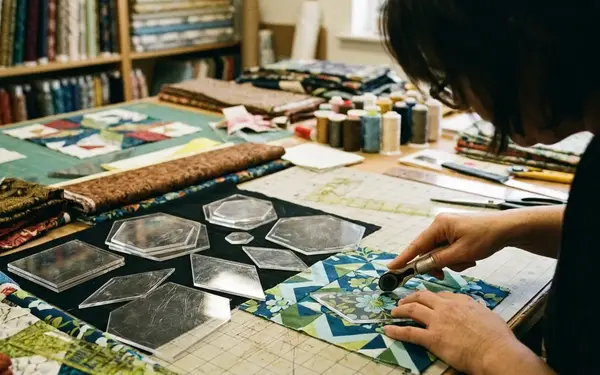
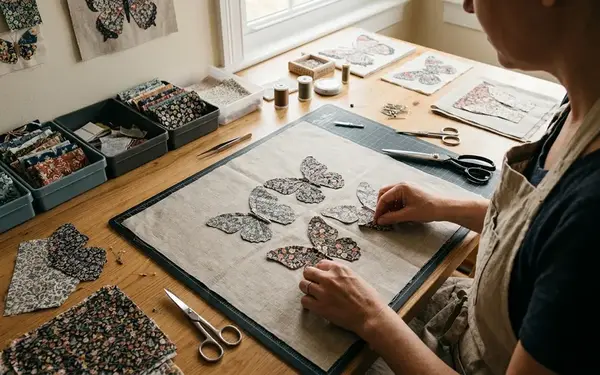
A compact exchange also suits the rhythm of fussy cutting. Cropping a motif invites discussion. Two quilters can compare whether a bird reads more clearly with its full tail visible or with the surrounding leaves balanced at the edges. Those small choices become shared reference points rather than anonymous pieces moving through a mailing system.
A window of 21 to 35 days keeps that conversation active while allowing unhurried fabric selection. The group remains present in everyone’s sewing space, yet the exchange does not stretch so long that enthusiasm dissipates.
When a Fabric Exchange Starts Feeling Like Work
Complexity usually arrives through accumulation. A detailed preference form creates design uncertainty. A handmade extra adds sewing time. Protective wrapping, a handwritten card, customs paperwork, tracking decisions, and a fixed reveal date each add another obligation.
Before long, a scrap exchange occupies several evenings.
An elaborate package may require a pieced item, several extras, a card, wrapping, and tracked postage. If the central project takes four to six hours, someone sewing in 30-to-45-minute sessions may spend 6 to 12 available sessions on it before packing anything. That is a substantial claim on evenings already shared with family, work, and other sewing plans.
Performance Pressure
Public reveal dates make lateness visible. Styled parcel photographs make presentation measurable. Required extras encourage comparison, even when nobody openly intends to rank the packages. Participants begin managing how their work will appear to the group, and perfectionism can stall the first cut.
This pressure hits beginners particularly hard. They may own fewer prints, feel unsure about motif placement, or need longer to prepare consistent pieces. Strict rules can turn their attention toward avoiding mistakes instead of getting to know another quilter.
The Workload Test
If the package needs a project plan rather than a short cutting list, reduce the scope before opening sign-ups. Friendship grows through repeated contact; extra objects cannot substitute for that contact.
Large international exchanges approaching 100 participants can work well for experienced guilds with several coordinators, written contingency procedures, and the capacity to replace missing parcels. That operating model has clear limits for casual groups. The workload estimates above apply to quilters working in short sessions; faster machine piecing or pre-cut stock will change the preparation rhythm, though packing and mailing steps remain.
The practical goal is to keep generosity voluntary. Optional extras still leave room for someone who enjoys adding a tea sachet or note, while every participant can complete the stated exchange without spending beyond the agreed fabric and postage.
Numbers That Keep a Mini Swap Manageable
Set the headcount first. Participant numbers determine the mailing load, the quantity of fabric to prepare, and whether the group can hold one another’s preferences in memory.
For a first direct exchange, I would choose four or five people in total. In a five-quilter group, each person has four recipients. Sending six fussy-cut pieces to each recipient creates a clear preparation total of 24 pieces. That is 24 deliberate motif choices rather than an open-ended gift package.
Choose One Fabric Unit
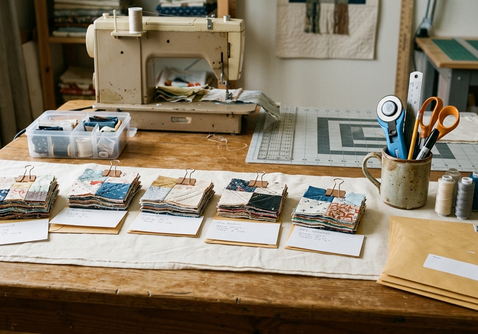
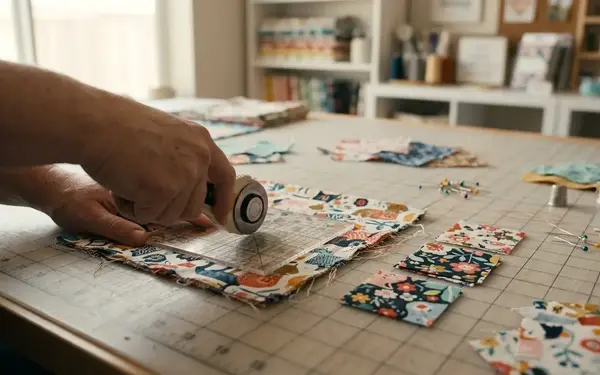
A useful prompt might request six 2.5-inch fussy-cut squares per recipient. State that 2.5 inches is the unfinished size, specify clean quilting cotton, and decide whether duplicates are acceptable. These details remove the need to infer what “a handful of scraps” means.
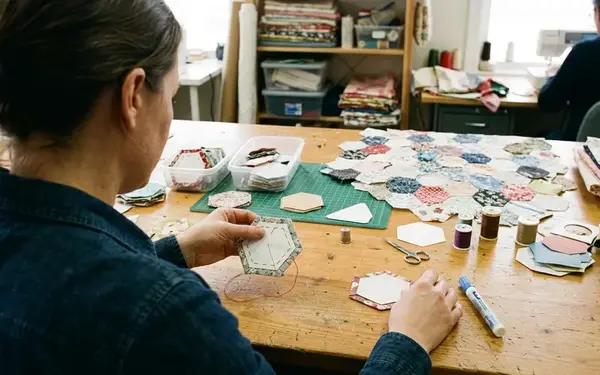
English Paper Piecing groups can exchange six fabric-covered EPP hexies instead. For 1-inch hexies, say that the measurement refers to the paper’s side length. Ask for roughly a 3/8-inch fabric allowance around every edge so recipients receive pieces that can join an existing layout.
Build the Calendar Backwards
Allow 28 to 35 days from confirmed sign-up to the mailing deadline. Place a private check-in around days 14 to 18. This check-in should answer practical questions: has everyone found the required print, does anybody need an address confirmed, and is a delay becoming likely?
Keep the response light. A participant should be able to type “cutting this weekend” or request an extension without preparing a progress report.
Check the Envelope Early
Postage deserves attention before optional extras enter the package. Layered fabric can push an envelope beyond local thickness or flexibility limits. Ask everyone to test the packed envelope against those rules before choosing letter or parcel postage.
That one check protects the low-cost promise of the swap. A rigid mailer, bulky embellishment, or extra stack of scraps can change the postage category. When extras remain optional, each sender controls that expense.
- Group: four to six participants.
- Quantity: five or six measurable pieces for each assigned recipient.
- Prompt: one fabric format with finished or unfinished dimensions stated clearly.
- Timing: 28 to 35 days, including one private midpoint check-in.
- Cost control: no required extras and an early envelope test.
Turning Fabric Preferences Into Real Connection
Kindness needs a visible form inside the group. A warm welcome helps, though the day-to-day rules carry more weight: unfinished work may be shared, advice appears only when requested, and thoughtful fabric selection matters more than flawless execution.
Invite one optional progress photograph between days 10 and 18. A useful prompt asks members to show two crops of the same print and ask which motif reads more clearly. Visible basting stitches, paper templates, cutting marks, and untidy sewing tables all belong in the frame.
This changes the conversation. Instead of waiting for polished parcel reveals, members talk while decisions are still open. Someone explains that the wider crop preserves a fox’s tail. Another notices how a narrow crop creates a stronger geometric repeat for an EPP rosette. The exchange becomes collaborative handwork carried through a group thread.
Motif-First Feedback
Respond first with one detail you enjoy about the motif or colour connection. Add one practical suggestion only when the maker has asked for advice. The reply should take about 5 to 10 minutes at most.
These conversations create memory. A centered bee recalls the person assembling a garden layout; a tiny purple flower brings back a discussion about contrast. The recipient feels seen because the sender made a specific choice, even if a square sits slightly off grain or a basting stitch remains visible.
Leave the group thread open for 7 to 14 days after the packages arrive. Members can post fabric combinations, thank senders, and test EPP layouts without the pressure of a single reveal moment. This is often where the swap moves beyond logistics. People begin sharing the next motif they are hunting, a layout question, or an invitation to exchange again.
Consistency matters more than spectacle. Small interactions repeated across cutting, mailing, and arranging give friendship somewhere practical to take root.
Write and Send Your First Invitation
The first task is a 70-to-110-word rule paragraph. It should resolve the decisions most likely to cause anxiety: item, quantity, dimensions, duplicate policy, extras, mailing window, and the process for delays.
A working version can read:
We’re exchanging six 2.5-inch unfinished fussy-cut squares with each person in a small group. Please use clean quilting cotton and centre a recognisable motif where possible. Duplicates are allowed. Extras are welcome only if you genuinely enjoy adding them; nobody is expected to include anything beyond the squares. We’ll confirm addresses privately and mail within 28 to 35 days of sign-up. If you need more time, send a private message before the deadline and take an extra 7 to 10 days without giving an explanation.
Send that paragraph privately to three or four quilting acquaintances. Ask for a simple yes or no within 3 to 5 days before creating a group thread. Including yourself, this produces a first group of four or five people, small enough for everyone to stay recognisable.
After the final headcount, confirm mailing details privately within the next 2 days. Schedule one check-in 10 to 14 days before mailing, and keep it focused on obstacles rather than presentation. Nobody needs to prove how much work they have completed.
A generous deadline protects the pleasure of choosing motifs. It also gives the group time to notice one another’s tastes before the envelopes close.
Open a blank message now, write the rule paragraph, and send it to three quilting acquaintances before the weekend ends.